Our Journey


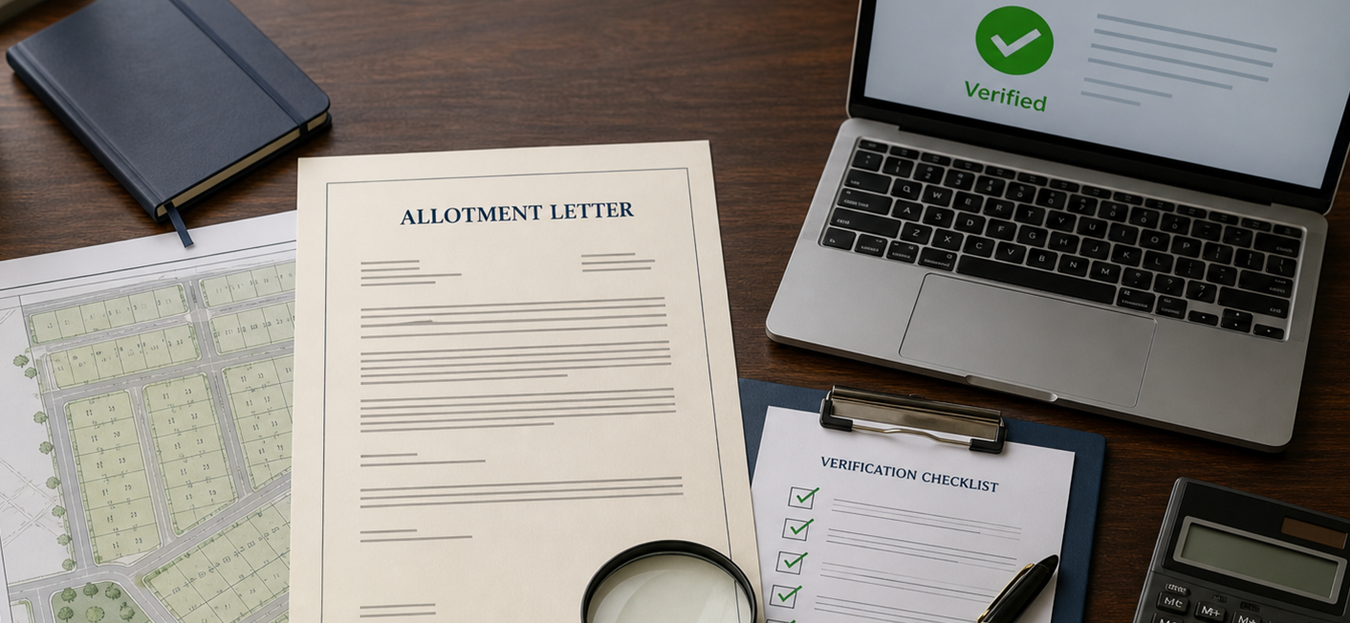
Buying property in Pakistan involves more than agreeing on a price and receiving a set of documents. Whether you are purchasing a residential plot, commercial property, or a property in a private housing society such as Lake City Lahore, understanding each document is essential before making a payment.
One of the documents buyers frequently encounter is an allotment letter. But what exactly does an allotment letter mean? Is it proof of ownership? Is it the same as a possession letter or title document? And can an allotment letter be transferred to another buyer?
This guide explains the allotment letter meaning, its importance in property transactions, the checks buyers should perform, and how it relates to property transfer.
An allotment letter is a formal document issued by a housing society, developer, or relevant authority confirming that a specific property has been allotted to a particular buyer.
It commonly identifies details such as the buyer's name, plot or unit number, project or block, property size, payment information, and applicable terms and conditions.
Lake City's own real-estate guidance describes an allotment letter as a document issued by the housing society to the original buyer to confirm the plot booking. It also distinguishes the allotment letter from documents such as a transfer letter, mutation, and sale deed/registry.
The exact legal effect of an allotment letter can vary according to the project, issuing authority, property type, and applicable documentation. Therefore, buyers should not assume that every allotment letter has the same legal status.
Depending on the issuing authority, an allotment letter may establish or record:
An allotment letter can therefore be an important part of the property's documentation history.
However, an allotment letter should not automatically be treated as the same thing as a registered title document, sale deed, mutation, or possession document. The applicable property structure determines which documents are required to establish and complete the buyer's rights.
An allotment letter is important because it creates a documentary record connecting the buyer with a particular property allocation.
For a property buyer, it can help establish:
According to experts, an allotment letter generally records the allocation and contractual terms but should not automatically be confused with the document that ultimately transfers legal ownership.
Not necessarily. An allotment letter is evidence of an allotment, but it should not automatically be considered equivalent to a registered title document or sale deed.
This distinction is particularly important in Pakistan because property documentation can differ between government authorities, private housing societies, developers, and different types of property.
For example, Lake City's published property-investment guidance distinguishes between:
Therefore, buyers should ask the relevant authority which documents constitute the complete ownership and transfer record for their particular property.
An allotment letter and a transfer letter serve different purposes.
The terminology can differ between housing societies, so buyers should always verify the exact documentation requirements directly with the relevant authority.
An allotment letter and possession letter are not the same document.
An allotment letter generally relates to the allocation of a property. A possession letter, on the other hand, relates to the stage at which possession of the property is formally handed over or recognized under the relevant process.
This distinction matters because a buyer may have documentation showing that a plot has been allotted without necessarily having reached the possession stage.
For example, property documentation used in housing schemes can distinguish allotment from possession, and third-party property discussions also show why buyers should verify whether a document is provisional, final, or possession-related rather than relying on terminology alone.
Before buying a property based on an allotment letter, carefully compare the document with the issuing authority's records.
Check that the name on the allotment letter matches the seller's original documentation and identification documents.
Spelling differences, incorrect names, or unexplained changes should be investigated before proceeding.
Confirm the:
The information should correspond with the society's official records.
Determine whether the property has:
Do not assume that a seller's statement that a property is "fully paid" is sufficient evidence.
Whenever possible, inspect the original document rather than relying solely on a scanned copy or photograph.
Community discussions about allotment letters repeatedly emphasize the importance of checking original documentation and confirming ownership with the relevant authority before making payment.
This is one of the most important steps.
Ask the relevant housing society or authority to confirm:
Do not rely exclusively on a property dealer or seller for property document verification.
A property transaction should involve more than checking one piece of paper.
A basic buyer-verification process should include:
Seller → Original documents → Society record → Property details → Dues → Transfer eligibility → Applicable government records → Legal review
Lake City's published investment guidance recommends paying attention to documentation such as allotment letters, transfer letters, mutation, and sale deed/registry depending on the nature of the property.
For buyers considering Lake City Lahore, the safest approach is to obtain the latest documentation and verification requirements directly from the relevant Lake City office or official resources rather than relying on outdated property-dealer checklists.
Lake City Lahore official website.
An allotment letter may be transferable in some property transactions, but transferability depends on the rules of the issuing society or developer and the specific terms of the document.
Some developers permit assignment or transfer subject to:
Other projects may impose restrictions on when or how an allotment can be transferred.
According to experts the transfer of an allotment letter depends on the developer's policy and the terms contained in the allotment documentation.
For this reason, never assume that possession of an allotment letter automatically gives a seller unrestricted authority to transfer the property.
During a property transfer, the allotment letter can form part of the chain of documentation used to establish the property's history.
A typical transaction may involve:
The exact process varies by authority and property type.
Property forums also illustrate that transfer requirements can include original allotment documentation, identification documents, sale agreements, taxes, transfer charges, and society-specific forms. These discussions are useful for understanding common buyer concerns, but they should not replace confirmation from the relevant authority.
For buyers and investors considering Lake City Lahore, document verification should be treated as a critical part of the purchasing process.
Lake City's own published guidance identifies the allotment letter as part of the legal and documentation framework for real-estate investment and distinguishes it from transfer documentation and other ownership records.
Before purchasing an allotment-based property in Lake City, consider confirming:
Because transfer charges, procedures, and documentation requirements can change, buyers should obtain the current information directly from Lake City's official channels before completing a transaction.
No. An allotment letter and possession are separate concepts.
An allotment letter can establish that a particular property has been allocated to a buyer, while possession relates to whether the property has been formally handed over and is available for possession according to the relevant authority's procedure.
Therefore, when buying a plot, ask specifically:
Is this an allotted plot, a balloted plot, or a possession plot?
Also confirm whether a separate possession letter or possession certificate has been issued.
A buyer should never assume that an allotment letter alone is sufficient to complete a valid transfer.
The relevant authority normally has its own verification and transfer process. The seller's identity, property record, original documents, dues, transfer eligibility, and other requirements may need to be checked before a transfer is approved.
This is why buyers should verify the property directly with the society rather than relying on a photocopy, scanned allotment letter, or verbal assurance from a seller.
If an original allotment letter has been lost, the correct procedure depends on the issuing authority.
Do not attempt to recreate, alter, or rely on an unofficial replacement.
Instead, contact the relevant housing society or authority and ask about its procedure for:
The Zameen Forum contains examples of buyers asking authorities about replacement procedures for lost allotment letters, demonstrating why the issuing authority's own process should be followed.
An allotment letter can be important, but the complete documentation depends on the property and authority.
A genuine-looking document does not eliminate the need to verify the property's official record.
Outstanding charges can affect the final cost and may complicate transfer.
An allotted plot may not necessarily be ready for possession.
Property documentation and transfer procedures vary between authorities.
A dealer can assist with a transaction, but independent verification is essential.
If there is a dispute, inheritance issue, mortgage, power of attorney, court case, or unclear ownership history, consult a qualified property lawyer before paying.
Before completing an allotment-based property transaction, make sure you have checked:
An allotment letter is an important property document, but it should be viewed as one part of the overall property documentation rather than a substitute for every other ownership or possession document.
For buyers in Pakistan, especially those considering properties in Lake City Lahore, the safest approach is to verify the original allotment documentation, confirm the property's official record, check outstanding dues and transfer eligibility, establish possession status, and identify any additional title or registration documents required for that specific property.
Most importantly, verify before you pay. A few additional verification steps can help reduce the risk of documentation problems, unexpected liabilities, and difficult property transfers later.
For the latest Lake City documentation and buyer information, refer to the society's official website and current official guidance.
Disclaimer: This article is for general informational purposes only and does not constitute legal, financial, investment, or property advice. Property requirements and transfer procedures may vary and change over time. Always verify documents and current information directly with Lake City Lahore or the relevant authority. Consult a qualified property lawyer before making any payment or property-related decision.
.svg)
